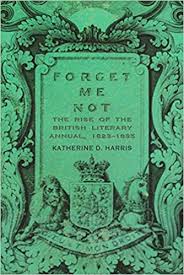
Today we each chose a corresponding image and text from a 19th century literary annual.
We discussed how the literary annual contributed to the progression in publishing, in terms of efficiency and increase in manufacturing, and lower costs. As a result, literature was becoming more accessible to the general public. Literary annuals, however, were targeted towards the middle class females who would receive the annuals as gifts.
In my mini-assignment, I wrote about the literary annual the Gem published by Thomas Hood. I looked at the story of Nina St. Morin, and I thought it was strange that the author chose to remain unnamed. The poets feared that illustrations would debase their work, so they were hesitant to publish in literary annuals.
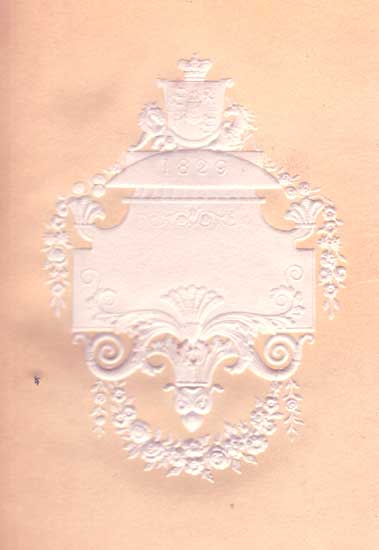
Inscription Page from Forget Me Not
In many of the literary annuals, once digitalized, you could see inscriptions. I thought it was interesting how the intricate emblem page designed for inscriptions (above) would be left blank, so as to not destroy its beauty. The inscriptions were generally written on the front blank pages.
Literary annuals seemed to be the Victorian Era’s coffee table books, but with the targeted audience of young females. Similar to coffee table books, the aesthetics of literary annuals tended to outshine the quality of the writing.
 Modernity & The Visual: Image & Text