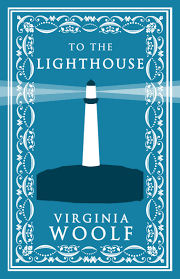
The Modernist Writer-Painter: Virginia Woolf
To the Lighthouse moves away from the neat and tidy series of events of story to a continuous and sometimes confusing reality. Even the major plot points are presented in brackets, as sides, just like in life we are interrupted in our illusion of safety and is beyond our control.
Val’s presentation gave an ekphrastic view of To the Lighthouse. She argues that Woolf’s use of description evokes similarly to a painting by forcing the reader to generate vibrant images in the mind. Val refers specifically to the fruit platter in To the Lighthouse. Terry gave a presentation on Lilly’s character and grieving, and he argued that Lilly’s grief began long before Mrs. Ramsey’s death and her painting is an attempt to deal with this grief.
Margaret Atwood read To the Lighthouse as a teenager and it didn’t resonate with her. At 45 she read it again and after having experienced grief, time and personality (the major themes of the novel), Woolf’s story finally resonated with her. To the Lighthouse is then not a novel for amateurs who might not understand the beauty of how its written.
The style of novel reminds me of Prochain Épisode written by Hubert Aquin because the protagonist is trying to complete a novel similar to Lilly in the way that she is trying to complete a painting throughout the course of the novel. Prochain Épisode is also written similarly in a stream of consciousness style.
 Modernity & The Visual: Image & Text